1. Introduction to Hazards Affecting Library Materials
Library materials are susceptible to deterioration caused by environmental conditions, chemical reactions and biological activities. Books, manuscripts, periodicals, newspapers, photographs, maps, microforms and other documentary resources are made from materials such as paper, cellulose fibres, leather, cloth, adhesives, inks and photographic substances. These materials may undergo physical, chemical or biological changes over time, resulting in the weakening, discolouration or destruction of their original structure.Deterioration is not always caused by a single factor. High temperature may accelerate chemical reactions, excessive humidity may encourage mould growth, and atmospheric pollutants may react with moisture to form substances that damage paper. The combined influence of these factors can substantially reduce the usable life of library collections.
Meaning of Hazards: A hazard is any condition, substance, organism or process that has the potential to cause damage to library materials. Hazards may originate from the surrounding environment, the chemical composition of materials or the activities of living organisms.
Deterioration: Deterioration refers to the gradual or sudden decline in the physical condition, chemical stability, appearance or usability of a material. In libraries, deterioration may appear as yellowing, brittleness, fading, staining, tearing, mould growth, insect damage or loss of recorded information.
Control Measures: Control measures are preventive, protective and corrective actions adopted to reduce the likelihood or severity of deterioration. These include environmental monitoring, suitable storage, housekeeping, pest management, disaster preparedness and professional conservation treatment.
Preventive Conservation: Preventive conservation refers to measures designed to minimise deterioration without directly altering the original object. Maintaining suitable temperature and humidity, controlling light exposure and using appropriate storage enclosures are important examples.
The preservation of library materials therefore depends upon understanding the causes of deterioration and implementing suitable measures before significant damage occurs. Professional guidance from the Canadian Conservation Institute (CCI), Northeast Document Conservation Center (NEDCC) and Library of Congress emphasises the importance of managing environmental conditions and preventing avoidable damage.
2. Classification of Hazards to Library Materials
Hazards affecting library collections can be broadly classified into three categories according to their nature and principal causes.- Environmental Factors: These include temperature, relative humidity, water, light, atmospheric pollution, smoke, dust and unsuitable ventilation. They originate mainly from surrounding environmental conditions and may cause direct physical damage or accelerate other deterioration processes.
- Chemical Factors: These include acidity, oxidation, hydrolysis, unstable inks, harmful adhesives, chemical contaminants and reactions associated with the ageing of materials. Chemical deterioration may originate within the material itself or result from contact with incompatible substances.
- Biological Factors: These include fungi, bacteria, insects, termites, rodents and other living organisms capable of damaging documentary materials. Biological deterioration commonly involves feeding, contamination, staining or the breakdown of organic substances.
| Category | Major Hazards | Common Effects |
|---|---|---|
| Environmental | Heat, humidity, water, light, dust, smoke and pollutants | Warping, fading, staining, brittleness and accelerated deterioration |
| Chemical | Acidity, oxidation, hydrolysis and harmful chemical substances | Yellowing, weakening, discolouration and chemical breakdown |
| Biological | Mould, insects, termites and rodents | Stains, holes, surface loss, contamination and material destruction |
3. Environmental Factors: Temperature
Meaning of Temperature: Temperature refers to the degree of warmth or coldness of an environment. It influences the physical stability and rate of chemical deterioration of library materials.Temperature is an important preservation factor because many deterioration processes accelerate as temperature increases. Books, manuscripts, photographic materials and other organic resources may age more rapidly when exposed to prolonged heat.
Effects of High Temperature: High temperature accelerates chemical reactions responsible for the breakdown of paper, adhesives, leather, photographic emulsions and other materials. Paper may become increasingly brittle, adhesives may weaken, and photographic images may fade or deteriorate. Warm conditions may also encourage certain biological activities when sufficient moisture is present.
Effects of Low Temperature: Lower temperatures generally slow chemical deterioration and are beneficial for many preservation materials. However, extremely low temperatures may increase the brittleness of some substances, and uncontrolled movement between cold and warm environments may cause condensation. The suitability of low-temperature storage therefore depends on the characteristics of the materials.
Effects of Temperature Fluctuations: Repeated temperature changes may cause expansion and contraction of different components within a library object. When materials respond differently, physical stresses may develop. Temperature changes can also influence relative humidity and contribute indirectly to damage.
Control Measures:
- Maintain a relatively cool and stable storage environment suitable for the collection.
- Avoid placing materials near radiators, heating equipment, direct sunlight or other sources of heat.
- Monitor temperature using thermometers or electronic data loggers.
- Provide suitable heating, ventilation and air-conditioning systems where possible.
- Inspect and maintain environmental control equipment regularly.
- Establish separate storage conditions for particularly sensitive materials, including certain photographic films and colour photographs.
4. Environmental Factors: Relative Humidity
Meaning of Relative Humidity: Relative Humidity (RH) is the amount of water vapour present in the air expressed as a percentage of the amount required for saturation at the same temperature.Humidity is particularly important because many library materials are hygroscopic, meaning they absorb and release moisture in response to environmental conditions.
Paper, parchment, leather and certain binding materials expand as they absorb moisture and contract as they dry. Excessive or repeated dimensional changes may cause distortion and structural damage.
Effects of High Relative Humidity: Excessive humidity can cause paper to swell, pages to curl, bindings to deform and adhesives to soften. It also encourages mould growth and some forms of insect activity. High humidity can accelerate chemical deterioration, particularly in acidic paper.
Effects of Low Relative Humidity: Extremely dry conditions may cause some library materials to lose flexibility, becoming stiff or brittle. Leather, parchment and certain photographic materials may be particularly sensitive to inappropriate dryness.
Effects of Humidity Fluctuations: Repeated changes in humidity cause materials to absorb and release moisture. These changes can produce warping, cockling, cracking and damage to bindings or layered objects.
Control Measures:
- Maintain moderate and reasonably stable relative humidity.
- Use thermohygrometers or data loggers to measure humidity regularly.
- Repair roof leaks, plumbing defects and sources of dampness promptly.
- Use dehumidification or humidification systems where appropriate.
- Avoid storing collections against damp walls or directly on floors.
- Provide adequate air circulation without exposing collections to uncontrolled outdoor humidity.
- Examine vulnerable storage areas regularly for condensation and mould growth.
Relationship Between Temperature and Humidity: Temperature and relative humidity influence one another. When air temperature changes without a corresponding change in moisture content, the relative humidity also changes. Therefore, temperature and humidity should be monitored together rather than managed independently.
5. Environmental Factors: Water and Moisture
Water as a Preservation Hazard: Water is one of the most destructive environmental hazards affecting library collections. It may enter storage areas through leaking roofs, damaged pipelines, flooding, overflowing drains, faulty air-conditioning systems or accidental spillage.Water can cause immediate physical damage and may also initiate chemical and biological deterioration. Paper absorbs moisture readily, and prolonged exposure may alter its dimensions, weaken its structure and damage inks or bindings.
Major Effects of Water Damage:
- Swelling and Distortion: Paper fibres absorb water and expand, resulting in curling, warping and distortion. Bound volumes may become swollen, while covers and boards may lose their original shape.
- Ink Bleeding: Water-soluble inks, dyes and pigments may dissolve or spread, producing blurred text, stains and loss of recorded information.
- Adhesion of Pages: Coated paper, commonly used in illustrated books and magazines, may become sticky when wet. If such pages dry while in contact with one another, they may adhere permanently.
- Weakening of Bindings: Water may soften adhesives, damage sewing structures and weaken the connection between covers and text blocks.
- Biological Growth: Damp library materials provide favourable conditions for fungal growth. Under suitable conditions, mould may begin developing within approximately 48 hours of a water incident, and sometimes sooner.
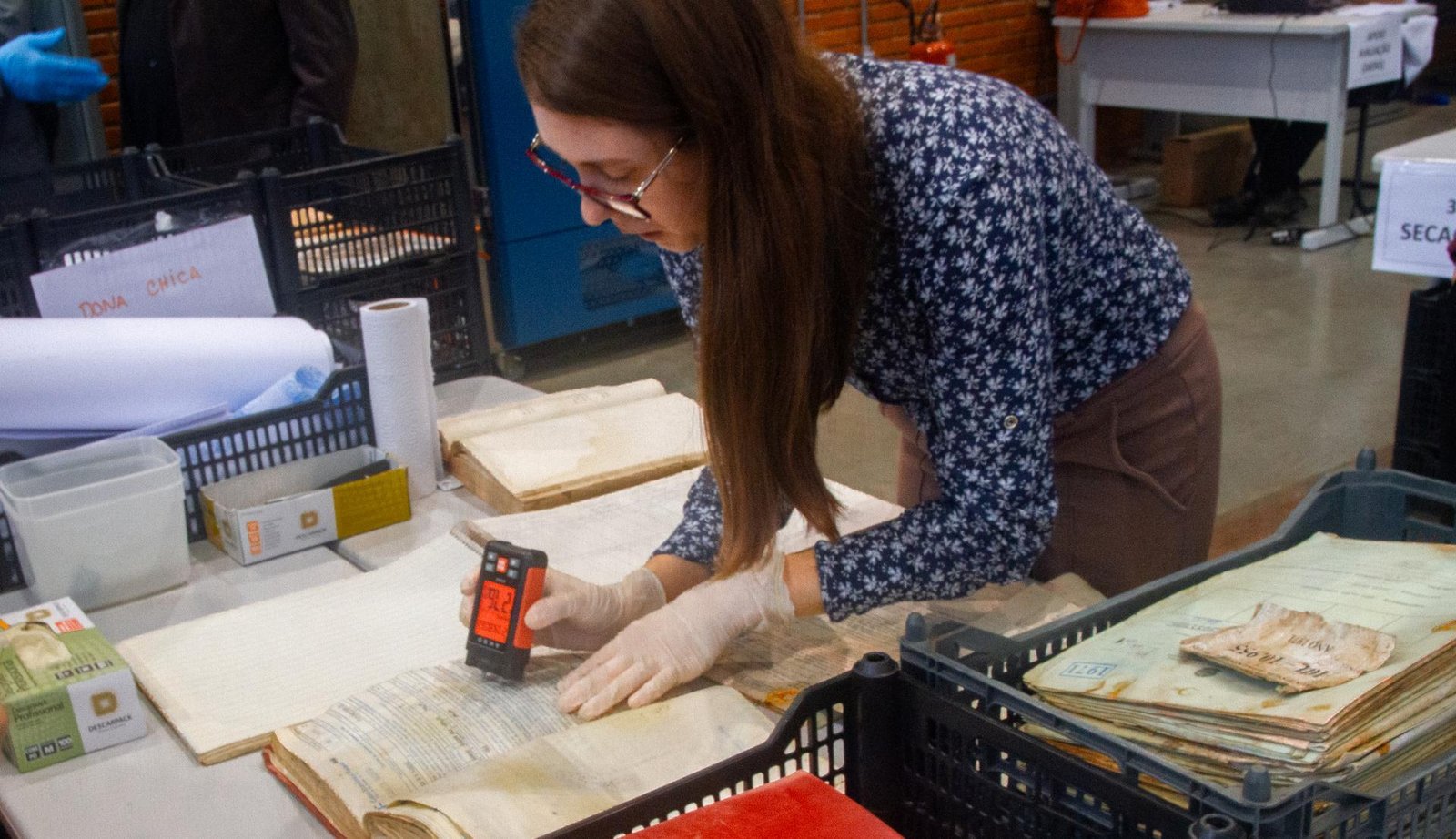
Figure : Assessment of water-damaged archival materials during recovery operations at the Federal University of Santa Maria, Brazil.
Control Measures:
- Inspect roofs, drainage systems, water pipes and air-conditioning equipment regularly.
- Avoid placing valuable collections directly beneath water pipes or near areas prone to leakage.
- Keep materials on raised shelving rather than directly on floors.
- Maintain adequate drainage and identify locations vulnerable to flooding.
- Prepare an emergency response plan for water-related incidents.
- Remove standing water and stabilise environmental conditions promptly after an incident.
- Dry slightly damp materials under controlled conditions and seek professional assistance for severely damaged collections.
Water-damaged collections should not be exposed to excessive heat or direct sunlight in an attempt to accelerate drying, as these methods may cause additional deterioration.
6. Environmental Factors: Light and Ultraviolet Radiation
Meaning of Light Damage: Light damage refers to the physical and chemical deterioration that occurs when materials absorb energy from visible light, ultraviolet radiation or other forms of electromagnetic radiation.Light is necessary for reading and consultation, but prolonged or excessive exposure can damage paper, inks, pigments, photographs, textiles and binding materials.
Visible Light: Visible light can cause fading and colour changes in dyes, inks and other sensitive substances. The extent of damage depends upon the intensity of illumination, duration of exposure and sensitivity of the material.
Ultraviolet Radiation: Ultraviolet (UV) radiation contains relatively high-energy wavelengths capable of accelerating photochemical reactions. It contributes to the weakening, discolouration and embrittlement of paper and other organic materials.
Infrared Radiation: Infrared radiation is primarily associated with heating. Excessive heating may accelerate chemical deterioration and produce unfavourable environmental conditions.
Major Effects of Light Exposure:
- Fading of inks, dyes, pigments and coloured book covers.
- Yellowing or darkening of paper.
- Weakening and embrittlement of organic materials.
- Deterioration of photographs and illustrations.
- Permanent alteration of the appearance of manuscripts and artworks.
- Prevent direct sunlight from falling on library materials.
- Use curtains, blinds, shades or suitable UV-filtering window films.
- Select lighting systems with appropriate ultraviolet emissions.
- Switch off lights in storage areas when they are not required.
- Maintain lower illumination levels for sensitive objects during exhibitions.
- Limit the duration of exhibitions involving original manuscripts, rare books and photographs.
- Use reproductions or facsimiles when continuous display is necessary.
Cumulative Nature of Light Damage: Light damage is cumulative and generally irreversible. A low level of light maintained for a long period may produce substantial damage. Therefore, both light intensity and exposure duration must be controlled.
7. Environmental Factors: Air Pollution, Smoke and Dust
Air quality is an important preservation consideration because library materials may be exposed to gases, particles and other contaminants originating both inside and outside the building.Air Pollution: Air pollution refers to the presence of harmful gases, particles or other substances in the atmosphere. Pollutants may enter through windows, ventilation systems and doors or originate from building materials, equipment, cleaning products and stored objects.
Major Gaseous Pollutants: Sulphur dioxide, nitrogen oxides, ozone, formaldehyde and certain volatile organic compounds can contribute to chemical deterioration. Their effects depend upon concentration, exposure duration, humidity and the sensitivity of materials.
Effects of Gaseous Pollution: Some pollutants react with atmospheric moisture and contribute to acidic conditions that weaken paper, leather and other organic materials. Oxidising pollutants such as ozone may also accelerate the deterioration of dyes, photographic images and certain polymers.
Smoke: Smoke contains fine particles, soot and gaseous contaminants produced by combustion. It may originate from fires, tobacco smoking, nearby industries, traffic or other sources. Smoke can deposit greasy or acidic residues on library materials, causing staining, unpleasant odours and chemical deterioration. Fire-related smoke damage may remain even when materials have not been directly burned.
Dust: Dust consists of small particles of soil, fibres, pollen, skin cells and other substances suspended in the air or deposited on surfaces. Dust can accumulate on books, shelves, photographs and manuscripts.
Effects of Dust: Dust may abrade delicate surfaces, retain moisture, carry pollutants and contribute to conditions favourable to biological contamination. Accumulated dust also reduces the cleanliness and usability of collections.
Inadequate Ventilation: Poor air circulation can contribute to localised humidity problems and the accumulation of pollutants. However, opening windows indiscriminately may introduce dust, humid outdoor air or additional contaminants.
Control Measures:
- Maintain suitable ventilation and air filtration systems.
- Use particulate filters and, where necessary, appropriate gaseous pollutant filtration.
- Keep windows closed during periods of heavy outdoor pollution or excessive humidity.
- Prohibit smoking inside library and archival storage areas.
- Keep collections away from exhaust outlets, loading areas and sources of chemical emissions.
- Clean shelves, floors and storage areas regularly using appropriate methods.
- Use suitable vacuum cleaners, including high-efficiency particulate air (HEPA) filtration where required.
- Provide preservation-quality boxes and enclosures for vulnerable materials.
- Select low-emission storage furniture and avoid unsuitable paints, adhesives and other materials near collections.
Environmental Monitoring: Libraries should monitor temperature, humidity, airborne dust and other significant air-quality problems. Regular maintenance of ventilation equipment and filters is important for maintaining effective environmental control.
8. Chemical Factors Affecting Library Materials
Chemical deterioration occurs when reactions within or around library materials alter their composition, strength, appearance or stability.Paper, leather, photographs, inks, adhesives and other collection components contain substances that may react with water, oxygen, light, heat or environmental contaminants. These reactions can occur slowly during normal ageing or more rapidly under unsuitable storage conditions.
- Acidity: Acidity is one of the principal causes of deterioration in many paper-based collections. Paper may contain acidic substances introduced during manufacturing or produced during ageing. Some historical wood-pulp papers were manufactured using alum-rosin sizing, which contributed to acidic conditions. Acidic paper may become yellow, discoloured, weak and brittle. As deterioration progresses, pages may crack or break during ordinary handling.
- Acid Hydrolysis: Hydrolysis is a chemical reaction involving water. In paper, acid-catalysed hydrolysis breaks chemical bonds in cellulose molecules, reducing the strength of the fibres. This process is accelerated by acidity, elevated temperature and moisture.
- Oxidation: Oxidation involves chemical reactions associated with electron transfer, frequently involving oxygen or other oxidising substances. In library materials, oxidation can contribute to discolouration, weakening of cellulose, changes in inks and pigments, and deterioration of certain binding materials.
- Lignin-Related Deterioration: Lignin is a natural component of wood and may remain in paper manufactured from mechanically processed wood pulp. Lignin-containing paper is often more susceptible to discolouration and deterioration, particularly when exposed to light and other unfavourable conditions. Newspapers are a familiar example of materials that may become yellow and brittle over time.
- Harmful Inks and Pigments: Certain historical inks contain chemically reactive substances. Iron-gall ink, for example, can contribute to paper deterioration through acidic and oxidative reactions. In severe cases, paper may weaken or develop holes along the written lines.
- Chemical Instability of Adhesives: Some adhesives deteriorate through oxidation, hydrolysis or other chemical processes. They may become brittle, discoloured or lose their bonding strength, resulting in detached covers, loose pages and weakened bindings.
- Acid Migration: Acid migration occurs when acidic substances move from one material into another through contact or related processes. For example, an acidic folder, cardboard backing or interleaving sheet may contribute to the deterioration of a document stored against it.
- Residual Processing Chemicals: Certain photographic materials may deteriorate because of chemicals remaining from inadequate photographic processing or washing. Such residues may cause staining, fading and damage to image-forming materials.
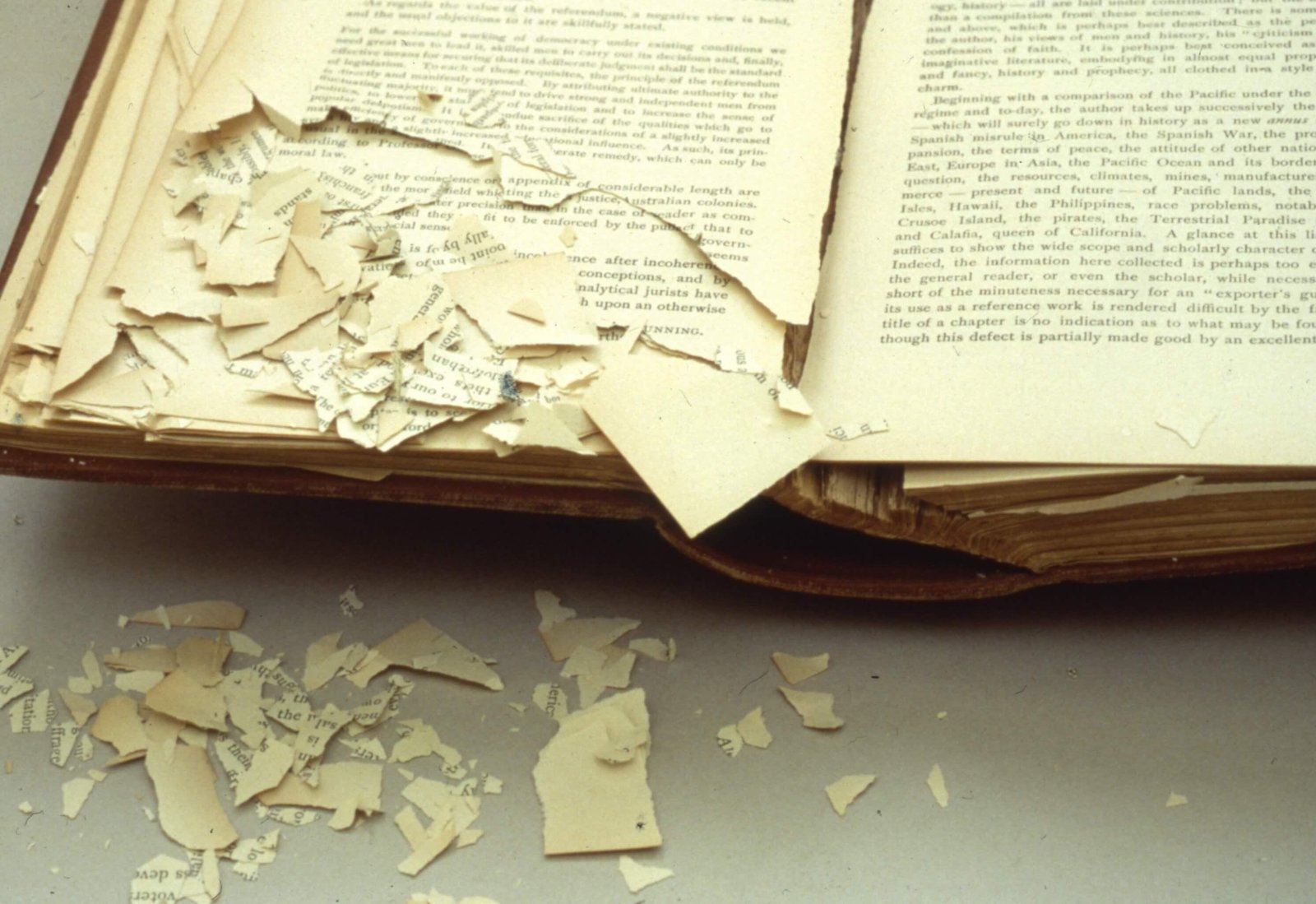
Figure: Severe deterioration and fragmentation of acidic paper. Source: Tokyo Metropolitan Library.
Control Measures for Chemical Deterioration:
- Use chemically stable, preservation-quality folders, boxes and other storage materials.
- Avoid contact between valuable documents and acidic cardboard, paper or unsuitable adhesives.
- Maintain cool, dry and stable storage conditions to slow chemical reactions.
- Protect materials from light and airborne chemical pollutants.
- Use appropriate acid-free or alkaline-buffered enclosures where compatible with the material.
- Avoid ordinary adhesive tapes, unsuitable glues, household chemicals and bleaching agents on original materials.
- Identify vulnerable acidic paper collections and establish preservation priorities.
- Refer materials requiring deacidification or specialised chemical treatment to trained conservators.
Importance of Preventive Control: The Library of Congress identifies acid-catalysed hydrolysis and oxidation among the important mechanisms responsible for chemical deterioration of paper. Preventive measures are particularly valuable because chemical damage cannot always be reversed once the material has become fragile.
9. Biological Factors Affecting Library Materials
Biological deterioration occurs when living organisms grow on, feed upon or otherwise damage library materials. Books, manuscripts, paper, leather, cloth and binding adhesives contain organic substances that may provide food or suitable habitats for certain organisms. Biological hazards are particularly serious in warm and humid environments. Poor housekeeping, inadequate ventilation, accumulated dust and water leakage can increase the likelihood of infestation.- Fungi and Mould: Fungi are organisms that obtain nutrients from organic matter. Mould refers to fungi that commonly grow as colonies on surfaces under favourable environmental conditions. Mould can develop on paper, leather, cloth, photographs and other library materials when sufficient moisture is available. Mould may appear as powdery, fuzzy or irregular growth, sometimes accompanied by a musty odour. Its activity can cause staining, weakening of fibres, deterioration of adhesives and loss of recorded information.
- Bacteria: Bacteria are microscopic organisms, some of which can contribute to the deterioration of organic materials under suitable conditions. Bacterial activity may occur in damp or heavily contaminated collections and can be associated with discolouration, unpleasant odours and the breakdown of certain materials. Fungi are generally a more prominent biological concern in ordinary library storage environments.
- Silverfish: Silverfish are small, wingless insects that favour relatively dark and humid environments. They may feed on starches, adhesives, paper coatings and other substances associated with books and documents. Their activity can produce irregular surface damage, erosion and small losses in paper or bindings.
- Termites: Termites are social insects capable of causing severe damage to cellulose-containing materials. They may attack books, paper, wooden furniture and structural components. Termite activity can produce tunnels, cavities and extensive destruction, particularly when an infestation remains undetected.
- Booklice: Booklice are small insects commonly associated with damp environments. Many feed primarily on microscopic fungi and other organic substances rather than directly consuming large quantities of paper. Their presence in collections may therefore indicate excessive humidity or mould-related problems.
- Beetles and Their Larvae: Certain beetle species and their larvae may damage books, bindings, leather, adhesives and other organic materials. The feeding activity of larvae may produce holes, channels and other structural losses.
- Cockroaches: Cockroaches may damage paper, bookbinding adhesives and other organic materials through feeding and contamination. Their droppings and secretions may also stain collection items.
- Rodents: Rats and mice may cause damage by gnawing on paper, cloth, bindings and storage containers. They may also use paper and other materials for nesting. Their urine and droppings create additional contamination and health concerns.
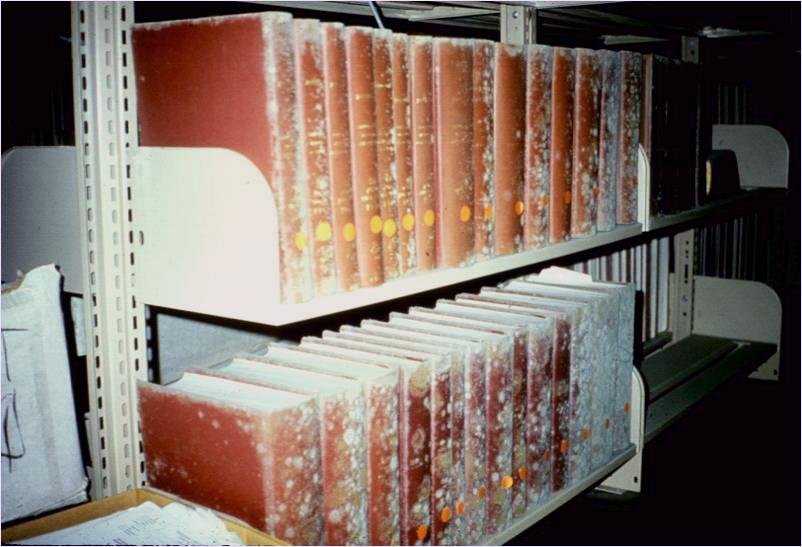
Figure: Fungal growth affecting library volumes. Source: U.S. National Library of Medicine.
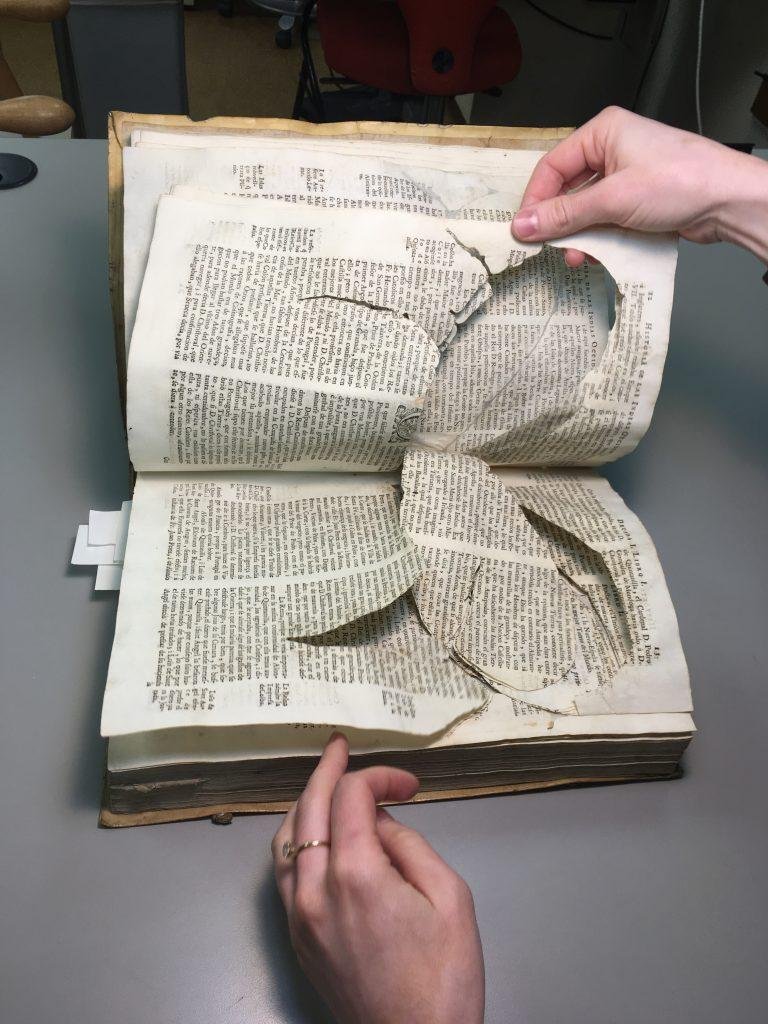
Figure: Extensive insect damage to a historical book. Source: Duke University Libraries.
Major Effects of Biological Deterioration: Biological activity may result in staining, holes, loss of paper, weakened bindings, surface contamination, unpleasant odours and permanent loss of information. Serious infestations can spread across collections and require specialised treatment.Factors Encouraging Biological Activity: Excessive moisture, warm temperatures, poor ventilation, dust, food residues, unsealed building openings and inadequate inspection can create favourable conditions for pests. The specific requirements vary between organisms, making identification important for effective control.
10. Control Measures for Biological Factors
The most effective approach to biological control in libraries is preventive management rather than relying on chemical treatment after an infestation becomes established.Integrated Pest Management (IPM): Integrated Pest Management is a systematic approach to preventing, identifying, monitoring and controlling pests through environmental management, housekeeping, physical exclusion and carefully selected interventions.
The Canadian Conservation Institute and NEDCC recommend IPM approaches that emphasise prevention, detection and appropriate responses according to the pest involved.
- Environmental Control: Maintain suitable temperature and relative humidity to discourage mould and reduce favourable conditions for many pests. Identify damp areas and eliminate sources of excessive moisture.
- Regular Housekeeping: Clean floors, shelves, cabinets and storage areas regularly. Remove dust, food residues, waste materials and unnecessary clutter that may attract pests or provide hiding places.
- Restriction of Food and Drink: Prohibit eating and drinking in collection storage areas. Food residues and waste can attract insects and rodents.
- Building Maintenance: Seal gaps around doors, windows, pipelines and ventilation openings. Inspect roofs, drains, walls and wooden furniture for signs of moisture or pest activity.
- Inspection of Incoming Materials: Examine newly acquired or donated collections before introducing them into storage areas. Materials showing signs of infestation should be isolated and assessed.
- Pest Monitoring: Use appropriate insect traps, regular visual inspection and incident records to identify pest activity. Monitoring helps determine the type, location and extent of an infestation.
- Quarantine of Affected Materials: Items suspected of infestation should be separated from unaffected collections using appropriate containment procedures to reduce the risk of spread.
- Professional Pest Treatment: Established infestations may require specialised treatment, including carefully controlled freezing or other professionally selected methods. Treatment must be compatible with the materials and the identified pest.
- Mould Management: When active mould is discovered, the affected materials or area should be isolated and the source of moisture addressed. Staff handling contaminated materials require appropriate health and safety precautions. Active mould should not be brushed or vacuumed casually because this may spread contamination.
- Avoidance of Uncontrolled Chemicals: Insecticides, fungicides, bleach, disinfectant sprays and chemical fumigants should not be applied directly to library materials without professional conservation assessment. Some treatments can damage materials, leave harmful residues or create health risks.
11. Integrated Prevention and Control in Libraries
Environmental, chemical and biological hazards should not be managed as completely separate problems because their causes and consequences often overlap. For example, a leaking roof introduces water into a storage room. Excessive moisture increases the relative humidity and may encourage mould growth. The same damp conditions may accelerate the chemical deterioration of paper and weaken binding adhesives. Effective control therefore requires identifying the original environmental problem and managing its subsequent effects.- Environmental Monitoring: Libraries should maintain regular records of temperature and relative humidity using suitable instruments. Areas near external walls, basements, windows and air-conditioning equipment may require additional attention.
- Appropriate Storage: Books and other materials should be stored on suitable shelving and kept away from damp walls, floors, direct sunlight and sources of pollution. Fragile items should receive protective enclosures selected according to their characteristics.
- Preventive Housekeeping: Regular cleaning reduces dust, organic residues and potential pest habitats. Cleaning procedures should not expose fragile collections to unnecessary moisture, abrasive contact or chemical substances.
- Chemical Stability: Libraries should select appropriate storage materials and avoid unsuitable adhesives, acidic enclosures and potentially harmful cleaning chemicals. Vulnerable collections may require professional conservation assessment.
- Biological Monitoring: Integrated Pest Management should include inspection, environmental control, pest identification, trapping where appropriate and careful documentation of incidents.
- Disaster Preparedness: Libraries should maintain procedures for responding to water leakage, flooding, fire, smoke contamination and biological outbreaks. Emergency priorities should consider staff safety, material vulnerability, uniqueness and the availability of professional assistance.
- Staff Training and Responsibility: Library personnel should understand the major signs of deterioration, appropriate handling practices and procedures for reporting preservation problems. Coordination between library staff, preservation specialists and building maintenance personnel is essential.
- Periodic Collection Assessment: Regular condition surveys help identify yellowing, brittleness, damaged bindings, mould, pest activity and other forms of deterioration. Findings should guide preservation priorities and resource allocation.
| Hazard | Principal Damage | Important Control Measures |
|---|---|---|
| High temperature | Accelerated ageing and chemical deterioration | Cool, stable storage and monitoring |
| Excessive humidity | Swelling, warping and mould growth | Humidity control, ventilation and leak prevention |
| Water | Staining, ink bleeding, adhesion and structural damage | Building maintenance and emergency recovery |
| Light and UV radiation | Fading, yellowing and embrittlement | UV filtering, reduced illumination and exposure control |
| Air pollution | Chemical reactions and material weakening | Air filtration and appropriate storage |
| Smoke and dust | Staining, abrasion and contamination | No-smoking policies, housekeeping and filtration |
| Acidity and oxidation | Yellowing, brittleness and loss of strength | Stable storage materials and appropriate conservation |
| Fungi and bacteria | Staining, contamination and weakening | Moisture control, isolation and professional treatment |
| Insects and rodents | Holes, loss of material and contamination | Integrated Pest Management and building maintenance |