1. Introduction to Preservation of Palm Leaves and Manuscripts
Palm leaves and manuscripts are important sources of historical, literary, scientific, religious and cultural information. They represent traditional methods of recording and transmitting knowledge before the widespread use of modern printing technologies. In India, manuscripts have been produced on different writing materials, including palm leaves, birch bark, handmade paper, cloth and other natural surfaces.Unlike printed publications, manuscripts are generally handwritten or manually inscribed documents. Many surviving manuscripts are unique, and their contents may not be available in any other form. They therefore possess considerable informational, historical, artistic and evidential value.
The physical composition of manuscripts makes them vulnerable to environmental and biological deterioration. Palm leaves may become brittle, crack or suffer insect damage, while paper and birch-bark manuscripts may develop tears, stains, discolouration and structural weakness. The inks, pigments, binding materials and protective covers may also deteriorate.
Meaning of Preservation: Preservation of palm leaves and manuscripts refers to the systematic protection, care, storage and management of these materials to minimise deterioration, maintain their physical integrity and ensure the continued availability of the recorded information.
Conservation: Conservation involves professional examination, stabilisation and treatment of damaged or deteriorating manuscripts. While preservation concentrates mainly on preventing damage, conservation addresses existing deterioration through appropriate technical interventions.
The fundamental objective is to protect both the original manuscript as a historical object and the information it contains.
2. Nature and Characteristics of Manuscripts
Definition of Manuscript: The National Mission for Manuscripts (NMM), Government of India, defines a manuscript, for its identification and documentation purposes, as a handwritten composition on paper, bark, cloth, metal, palm leaf or another material that is at least 75 years old and possesses significant scientific, historical or aesthetic value.The age criterion is specific to the Mission's definition. In the broader academic sense, a manuscript is a handwritten or manually produced document and does not necessarily have to be 75 years old.
Major Characteristics:
- Handwritten Nature: Manuscripts contain information recorded by hand through writing, engraving, painting or related techniques.
- Material Diversity: They may be produced on palm leaves, birch bark, handmade paper, cloth and other suitable surfaces.
- Historical and Cultural Significance: Manuscripts often provide original evidence of intellectual traditions, artistic practices, languages and historical knowledge.
- Uniqueness: Many manuscripts are original works or distinctive handwritten copies that cannot be replaced by identical objects.
- Material Sensitivity: Natural writing supports, inks, pigments and binding materials may deteriorate because of environmental and chemical changes.
- Special Preservation Requirements: Preservation methods must be selected according to the physical composition, condition and cultural significance of each manuscript.
| Material | Characteristics | Principal Preservation Concerns |
|---|---|---|
| Palm leaves | Prepared plant leaves used for writing or inscription | Cracking, splitting, brittleness and insect damage |
| Birch bark | Thin, layered bark used as a writing surface | Delamination, curling and brittleness |
| Handmade paper | Fibrous writing material supporting ink and pigments | Tears, staining, acidity and ink corrosion |
| Cloth | Textile support used for writing and illustration | Fibre weakening, staining and biological deterioration |
Preservation begins with identifying the manuscript's writing support because a treatment appropriate for paper may not be suitable for palm leaves or birch bark.
3. Preservation of Palm-Leaf Manuscripts
Palm-leaf manuscripts are traditional handwritten documents prepared from processed leaves of particular palm trees. They have been widely used in India, Sri Lanka, Nepal and several parts of Southeast Asia for recording religious texts, literature, medicine, astronomy, mathematics, philosophy and other subjects.- Materials Used: Two important palm species associated with manuscript production are the palmyra palm (Borassus flabellifer) and the talipot palm (Corypha umbraculifera). Palm-leaf manuscripts are generally composed of long, narrow leaves that have been processed to produce suitable writing surfaces. Their physical characteristics, such as flexibility, thickness and surface texture, depend partly on the palm species and preparation methods.
- Traditional Preparation of Palm Leaves: The preparation process commonly involved selecting suitable leaves, cutting them, boiling or otherwise treating them, drying and smoothing their surfaces. Practices varied considerably between regions and manuscript-making traditions. The prepared leaves were cut into rectangular strips. Text was written with ink or inscribed using a pointed instrument called a stylus. Where letters were incised into the leaf, dark pigment was often rubbed into the grooves to make them visible.
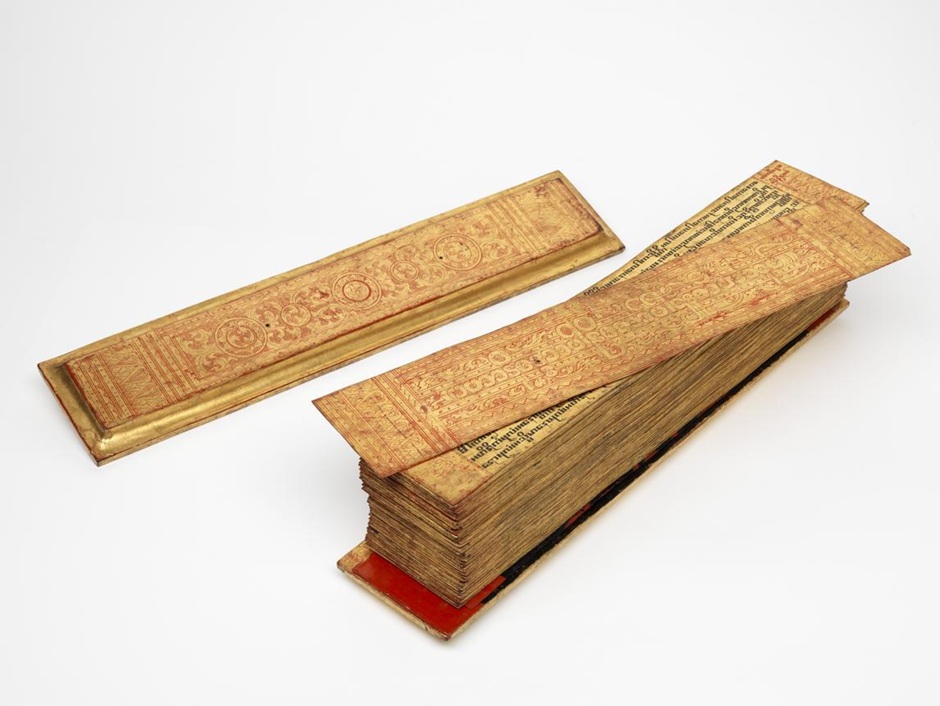
Figure 1: A traditional Burmese-Pali palm-leaf manuscript showing the folios and protective covers.
Importance of Palm-Leaf Manuscripts: Palm-leaf manuscripts preserve important components of the documentary heritage of South and Southeast Asia. Their value extends beyond the written text because the leaves, writing techniques, binding arrangements, pigments and covers also provide evidence of historical manuscript-production practices.
4. Major Causes of Deterioration of Palm-Leaf Manuscripts
Palm leaves are organic materials composed primarily of plant fibres. Their physical and chemical characteristics make them susceptible to deterioration, particularly under unsuitable environmental conditions.- Temperature and Humidity: High temperatures accelerate the ageing and deterioration of organic materials. Excessive relative humidity encourages mould growth and biological activity, whereas excessively dry conditions may increase brittleness. Frequent environmental fluctuations can produce physical stress.
- Brittleness and Cracking: As palm leaves age, they may lose flexibility and become increasingly brittle. Splitting often occurs along the natural direction of the plant fibres. Repeated bending or handling can cause existing cracks to extend.
- Insect Infestation: Insects may feed on or damage plant-based manuscript materials, producing holes, surface loss and weakening of the folios. Poor storage and housekeeping conditions can increase the risk of infestation.
- Fungal Growth: High humidity, poor ventilation and damp storage environments can encourage mould growth. Fungal activity may stain the leaves, weaken their structure and affect the legibility of inscriptions.
- Improper Handling: Pulling tightly bound leaves, bending brittle folios and repeatedly turning unsupported leaves can cause breakage. Particular care is required near binding holes, where damage may concentrate.
- Dust and Atmospheric Pollution: Dust and pollutants accumulate on manuscript surfaces and may contribute to surface damage, staining or chemical deterioration.
- Deterioration of Writing Materials: Inks, pigments and substances used in traditional manuscript preparation may undergo physical or chemical changes. As a result, inscriptions may fade, become less legible or detach from the leaf surface.
- Inadequate Storage: Unsuitable bundles, excessive pressure, damaged protective covers and poorly fitting containers can cause deformation and mechanical damage.
5. Preservation Methods for Palm-Leaf Manuscripts
The preservation of palm-leaf manuscripts primarily involves preventive conservation, appropriate storage, careful handling, regular inspection and professional treatment when necessary.- Environmental Control: Palm-leaf manuscripts should be maintained in cool, clean and relatively dry environments with stable temperature and relative humidity. Excessive heat, dampness and rapid environmental fluctuations should be avoided. The appropriate environmental range should be determined according to the manuscript's condition, composition and institutional conservation guidance rather than applying a universal setting to every collection.
- Proper Storage: Manuscripts should be stored horizontally with adequate physical support. Suitable preservation-quality boxes, boards and protective enclosures help prevent bending, abrasion and dust accumulation. Manuscripts of different sizes should be accommodated in appropriately sized containers.
- Protection Against Insects and Fungi: Storage areas should be inspected and cleaned regularly. Integrated Pest Management (IPM) involves monitoring pest activity, maintaining housekeeping standards, reducing environmental conditions favourable to infestation and applying suitable control measures when necessary. Pesticides should not be applied directly to valuable manuscripts without professional conservation advice.
- Careful Handling: Palm-leaf manuscripts should be handled on clean and stable surfaces. Fragile leaves must be adequately supported while being examined. Binding cords should not be tightened, loosened or removed casually because doing so may damage the leaves or disturb their original arrangement.
- Surface Cleaning: Loose dust may be removed through carefully controlled methods appropriate to the manuscript's condition. Fragile inscriptions and powdery pigments can be damaged by improper cleaning. Therefore, cleaning of valuable or deteriorating manuscripts should be undertaken by trained personnel.
- Periodic Condition Assessment: Manuscripts should be examined for cracks, tears, insect damage, mould growth, deformation and deterioration of writing materials. Observed changes should be documented so that appropriate conservation action can be planned.
- Professional Conservation Treatment: Damaged palm leaves may require stabilisation or specialised repairs. Modern conservation treatments can involve carefully selected supporting materials and adhesives, but their suitability depends on the manuscript's composition, condition and cultural significance.
- Traditional Preservation Practices: Historical palm-leaf preservation traditions sometimes involved the use of natural oils, turmeric, neem, camphor and other plant-derived substances. These practices are important for understanding the history of manuscript care. However, their continued application to original manuscripts requires professional evaluation because oils and chemical substances may produce staining, alter surfaces, attract dust or interfere with later conservation treatments.
6. Preservation of Other Manuscript Materials
Apart from palm leaves, manuscripts were historically prepared on handmade paper, birch bark, cloth and other writing supports. Each material presents distinct preservation challenges.- Paper Manuscripts: Paper manuscripts may contain handwritten text, miniature paintings, illustrations and decorative elements. Their deterioration may result from acidity, moisture, mechanical damage, biological growth or chemical instability of inks and pigments.
- Birch-Bark Manuscripts: Birch bark is a layered natural material historically used for writing, particularly in parts of northern India and adjoining regions. Its deterioration may involve curling, splitting, brittleness and separation of layers. Because the bark is structurally different from paper, special care is needed to avoid forcing curled or brittle sections into a flat position.
- Cloth Manuscripts: Some manuscripts were written or painted on textile supports. These materials may deteriorate through fibre weakening, staining, dust accumulation, biological growth and mechanical stress. The stability of dyes and pigments must also be considered.
- Illustrated Manuscripts: Manuscripts containing miniature paintings or decorative pigments require additional attention because some colours are sensitive to light, moisture and physical contact. Fragile or flaking pigments can be damaged even by ordinary surface cleaning.
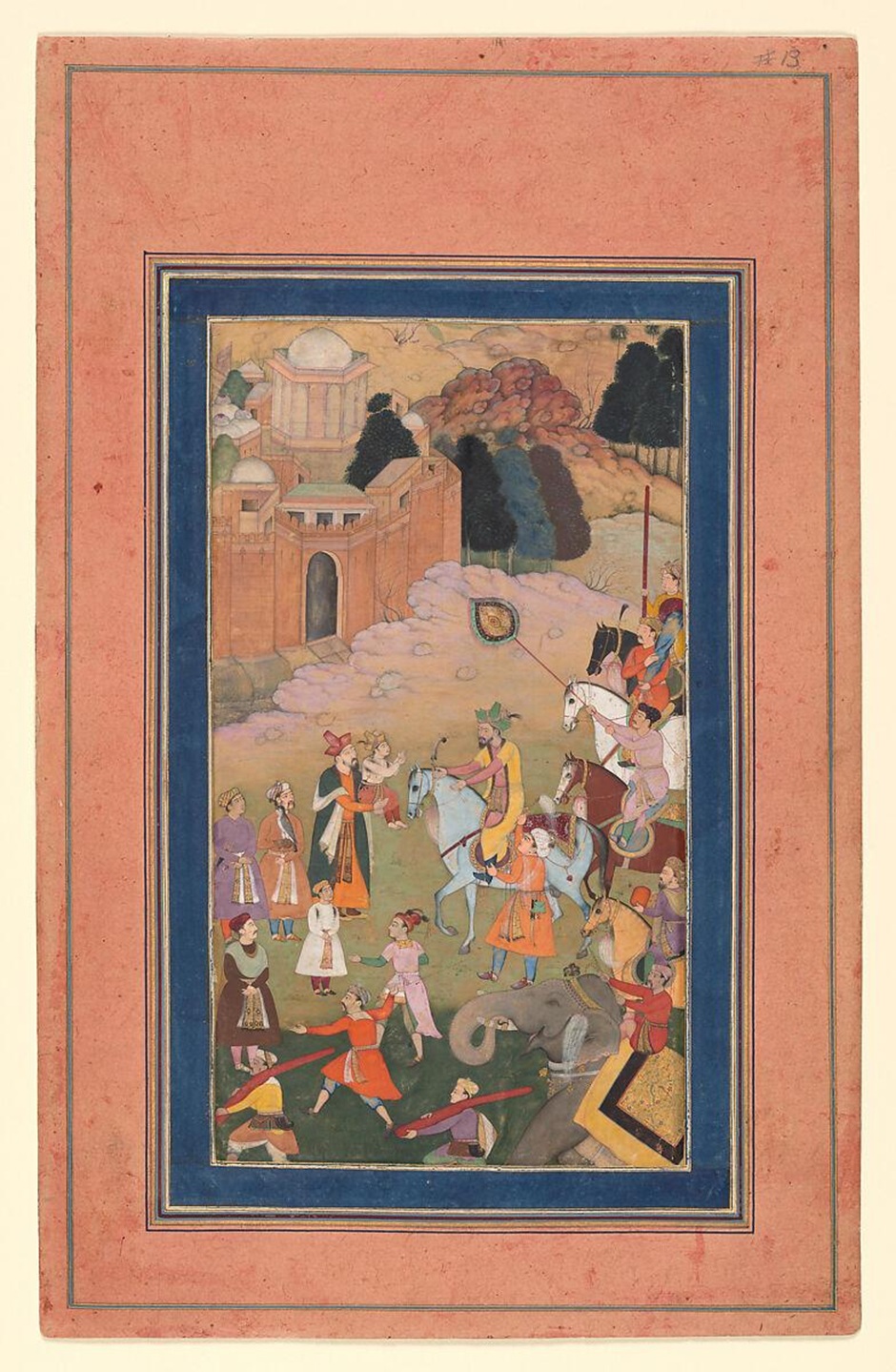
Figure 2: An illustrated paper manuscript folio from the Akbarnama, approximately 1604, showing the use of ink, opaque watercolour and gold on paper.
Manuscripts composed of multiple materials may require particularly careful preservation. For example, an illustrated paper manuscript may contain chemically sensitive inks, mineral pigments, textile binding materials and decorative metallic elements. A conservation treatment suitable for one component may adversely affect another.
7. Major Causes of Deterioration of Manuscripts
Although the deterioration processes vary according to the writing support, several factors commonly affect traditional manuscripts.- Physical Deterioration: Repeated handling, improper folding, excessive pressure and unsuitable storage may cause tears, abrasions, cracks, broken bindings and loss of material.
- Chemical Deterioration: Chemical reactions can weaken paper fibres, affect inks and cause discolouration. Acidic paper may become brittle, while certain traditional inks may contribute to the deterioration of their supporting material.
- Ink Corrosion: Some historic manuscripts contain iron-gall ink, which was widely used in different manuscript traditions. Certain formulations can cause chemical deterioration of paper, resulting in discolouration, brittleness and holes along written lines. Such damage is known as iron-gall ink corrosion.
- Biological Deterioration: Insects, mould and other biological agents may damage organic writing supports. High humidity and poor housekeeping increase the likelihood of biological deterioration.
- Environmental Deterioration: Excessive temperature, humidity fluctuations, light and atmospheric pollution can accelerate ageing and damage sensitive components.
- Human Factors: Careless handling, inappropriate repairs, unsuitable cleaning and untrained interventions may cause irreversible damage.
8. Preservation and Conservation Methods for Manuscripts
The preservation of manuscripts should begin with non-invasive preventive measures. Direct conservation treatments should be undertaken only when necessary and after appropriate examination.- Environmental Management: Manuscripts should be stored in stable, clean and relatively cool conditions. For many paper-based collections, a relative humidity of approximately 35–50% is a useful general guidance range, although some materials require different conditions. Rapid fluctuations, excessive moisture and direct sunlight should be avoided.
- Protective Storage: Loose manuscript folios should be kept in suitable preservation-quality folders and boxes. Fragile manuscripts may require individual supports or specially designed enclosures. Large manuscripts should be supported adequately to prevent bending and physical stress.
- Safe Handling: Manuscripts should be consulted on clean, flat and stable surfaces. Fragile folios should be supported during examination, and pages should not be forced apart or flattened. Direct contact with unstable inks or pigments should be avoided.
- Controlled Cleaning: Surface cleaning may help remove loose dust and dirt. However, cleaning methods must be selected according to the condition of the manuscript and the stability of its writing materials. Water, solvents, erasers and other cleaning agents should not be applied without professional assessment.
- Repair and Stabilisation: Torn or weakened manuscripts may require specialised treatment using carefully selected conservation materials. Such work may include stabilising damaged edges, supporting tears or addressing structural weakness. Conservation treatment should be documented and should minimise unnecessary alteration of the original material.
- Protection of Inks and Pigments: Manuscripts containing unstable inks or flaking pigments require special handling. Treatment decisions should consider possible chemical reactions and the risk of further loss. The Library of Congress has developed specialised research and treatment protocols for manuscripts affected by iron-gall ink corrosion.
- Documentation and Monitoring: The condition of manuscripts should be documented before and after conservation treatment. Periodic inspection allows institutions to identify deterioration at an early stage and evaluate whether existing preservation measures remain effective.
9. Role of Digitisation in Manuscript Preservation
Digitisation involves creating digital representations of physical manuscripts through scanning or photographic imaging.It supports manuscript preservation by reducing the need for repeated physical handling and enabling the information contained in fragile originals to be consulted through digital copies. Major Benefits of Digitisation:
- Reduced Physical Handling: Digital copies can be used for routine consultation, protecting fragile originals from frequent use.
- Improved Accessibility: Manuscript images can be consulted by researchers without requiring direct access to the original objects.
- Information Documentation: High-quality digital images help record the appearance, sequence and visible condition of manuscript folios.
- Support for Research: Digitised manuscripts facilitate the study of historical texts, scripts, illustrations and documentary traditions.
- Assistance in Disaster Recovery: Existing digital copies may preserve informational evidence when original manuscripts are damaged or lost.
The Indira Gandhi National Centre for the Arts (IGNCA) has undertaken manuscript microfilming and digitisation programmes to support the documentation and accessibility of important Indian manuscript collections.
10. Preservation Management in Manuscript Repositories
Effective manuscript preservation requires coordinated institutional planning involving collection identification, preventive care, conservation expertise and access management.- Identification and Documentation: Manuscript repositories should maintain accurate records describing the writing material, language, script, subject, physical condition, provenance and storage location of each manuscript.
- Condition Assessment: Regular inspection helps identify damaged, fragile or vulnerable manuscripts. Conservation priorities should be established according to the severity of deterioration, uniqueness and importance of the materials.
- Environmental Monitoring: Storage facilities should maintain appropriate environmental conditions and regularly monitor temperature, relative humidity and pest activity.
- Handling and Access Policies: Institutions should establish procedures for consulting manuscripts, including the use of appropriate supports, restrictions on unnecessary handling and supervision of fragile materials.
- Conservation Expertise: Specialised conservation treatments should be undertaken by qualified professionals with knowledge of the particular manuscript materials.
- Disaster Preparedness: Manuscript repositories should maintain emergency plans for fire, water damage, insect infestation and other risks. These plans should include arrangements for stabilising and recovering damaged materials.
- Training and Awareness: Staff, researchers and manuscript custodians should be informed about safe handling practices, early signs of deterioration and basic preventive conservation.
The preservation of palm leaves and manuscripts ultimately requires an integrated approach combining preventive conservation, appropriate storage, careful handling, professional treatment, documentation and controlled access. Such measures help safeguard the authenticity, material integrity and long-term availability of invaluable manuscript heritage.