1. Introduction to Preservation of Films, Floppies and Disks
Films, floppy disks and other storage disks are important information carriers used to record, store and retrieve visual, audiovisual and digital information. These materials have been widely used in education, research, scientific documentation, entertainment, administration and cultural heritage preservation. Film-based media preserve photographic images and moving pictures, while magnetic and optical disks store electronically encoded information, including documents, photographs, audio recordings, videos and software.Unlike conventional printed materials, these information carriers depend on particular physical, chemical and technological characteristics for their continued usability. Photographic films contain light-sensitive image-forming materials, floppy disks store information through magnetic patterns, and optical discs use laser-readable recording structures. Hard disks similarly depend on magnetic recording technology, combined with mechanical and electronic components.
Over time, these materials may deteriorate because of chemical instability, environmental conditions, physical damage, manufacturing defects and repeated use. Their contents may also become inaccessible when compatible equipment or software is no longer available. Consequently, preserving the physical carrier alone may not be sufficient to ensure continued access to recorded information.
Meaning of Preservation of Films, Floppies and Disks: Preservation refers to the systematic protection, care, storage, monitoring and management of these information carriers to minimise deterioration, prevent information loss and maintain their accessibility and usability over time.
Physical Preservation: Physical preservation focuses on protecting the original carrier against chemical deterioration, mechanical damage, contamination and unsuitable environmental conditions.
Content Preservation: Content preservation focuses on maintaining access to the recorded information through appropriate copying, duplication, digitisation, data transfer and continuing management.
For example, an old floppy disk may remain physically intact but become inaccessible because a compatible disk drive is unavailable. Similarly, a motion picture film may survive in storage but become too brittle to project safely. Effective preservation must therefore address both the condition of the original medium and the accessibility of its contents.
2. Types and Characteristics of Films, Floppies and Disks
These materials can be classified according to the method used to record information and the physical structure of the storage medium.| Material | Common Examples | Recording Technology |
|---|---|---|
| Photographic films | Negatives, slides, transparencies | Photochemical image formation |
| Motion picture films | 8 mm, 16 mm and 35 mm films | Sequential photographic images |
| Floppy disks | 8-inch, 5.25-inch and 3.5-inch diskettes | Magnetic recording |
| Optical discs | CDs, DVDs and Blu-ray Discs | Laser-readable optical recording |
| Hard disks | Internal and external hard disk drives | Magnetic recording on rigid platters |
Photographic Films: Photographic films record still images using light-sensitive materials supported by a transparent film base. They are commonly used for photographic negatives, slides, scientific images and archival reproductions.
Motion Picture Films: Motion picture films contain sequences of photographic frames that produce the appearance of movement when displayed at an appropriate rate. They may also contain accompanying sound information.
Floppy Disks: Floppy disks are removable magnetic storage media consisting of a flexible recording disk enclosed within a protective jacket. They were widely used for storing and transferring computer files before newer storage technologies became common.
Optical Discs: Optical discs store information in structures or recording layers that can be read using laser technology. Compact Discs (CDs), Digital Versatile Discs (DVDs) and Blu-ray Discs differ in storage capacity, recording structure and technical characteristics.
Hard Disks: Hard disk drives store digital information magnetically on rotating rigid platters. Unlike floppy disks, their recording surfaces and associated read/write mechanisms are normally enclosed within a protective drive assembly.
Although all these materials act as information carriers, their deterioration mechanisms differ considerably. Preservation measures must therefore be selected according to the specific physical and technical characteristics of each medium.
3. Need and Importance of Preservation
The preservation of films, floppies and disks is essential for protecting recorded information against deterioration, technological obsolescence and permanent loss.- Prevention of Information Loss: Films and disks may contain unique photographs, research documents, historical recordings and institutional records. Physical damage or technical failure can result in the permanent loss of valuable information.
- Protection Against Deterioration: Photographic films may shrink, fade or become brittle. Floppy disks may suffer magnetic or mechanical deterioration, while optical discs may develop scratches, corrosion or damage to their recording layers.
- Protection of Cultural Heritage: Motion picture films, historical photographs and digitally stored records document cultural activities, historical events and intellectual achievements. Their preservation supports the continuity of documentary heritage.
- Maintaining Long-Term Accessibility: Many older storage media depend on equipment that is no longer commonly available. Preservation planning helps ensure that valuable information remains accessible even when original technologies become obsolete.
- Support for Research and Education: Films and electronic storage media may contain research datasets, documentary evidence, educational recordings and unpublished scholarly materials. Their preservation supports future consultation, verification and reuse.
- Reduction of Recovery Costs: Preventive preservation and timely information transfer can reduce the need for expensive data recovery, film restoration or specialised conservation treatment.
4. Preservation of Photographic and Motion Picture Films
Photographic and motion picture films are recording materials that preserve images through photochemical processes. A traditional film generally consists of a transparent plastic support, a gelatin emulsion and image-forming substances. In black-and-white photographic film, the image commonly consists of metallic silver, while colour films generally contain dyes that reproduce different colours.Film preservation requires particular attention to the stability of the plastic support and photographic emulsion. Deterioration of either component can result in irreversible image loss.
Major Film Bases:
- Cellulose Nitrate Film: Cellulose nitrate was widely used in early motion picture and photographic films. It is chemically unstable and highly flammable. As deterioration progresses, the film may become sticky, discoloured, brittle or physically distorted. Advanced deterioration can destroy the recorded image and create serious fire hazards.
- Cellulose Acetate Film: Cellulose acetate was introduced as a safer alternative to nitrate film. However, it is also susceptible to chemical deterioration. A major problem is vinegar syndrome, which results from the chemical breakdown of the acetate support and is commonly associated with a vinegar-like odour, shrinkage, brittleness and deformation.
- Polyester Film: Polyester is a comparatively stable plastic support used for photographic and motion picture film. It has greater chemical stability than nitrate and acetate film bases, although its photographic emulsion and image-forming materials can still deteriorate.
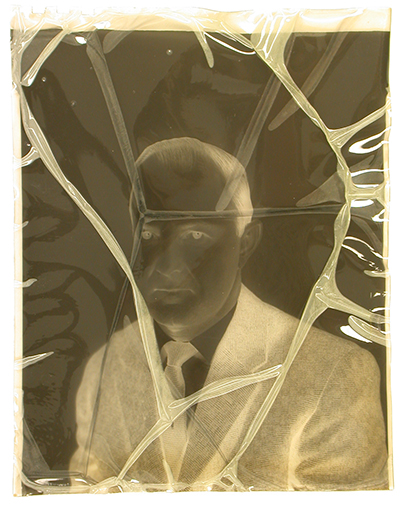
Figure 1: Deteriorated film showing physical damage and distortion
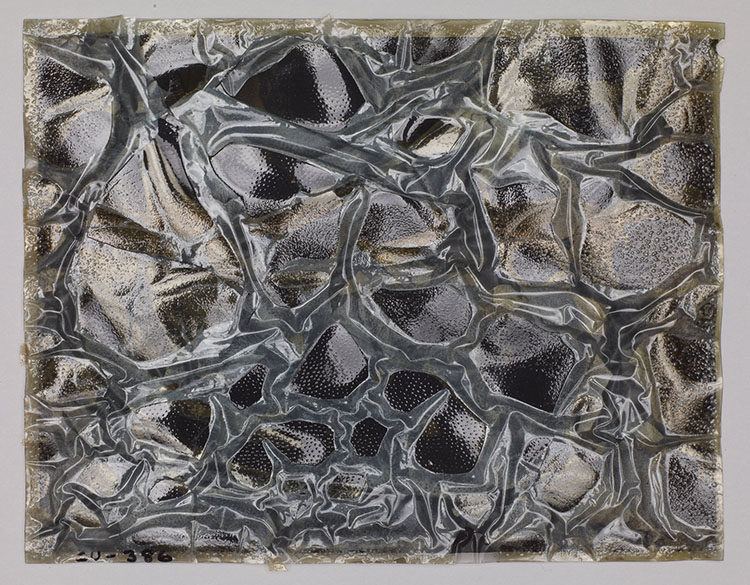
Figure 2: Examples of deterioration affecting cellulose acetate photographic films.
- Chemical Deterioration: The instability of nitrate and acetate supports can result in decomposition, shrinkage, brittleness and loss of recorded information.
- Colour Fading: The dyes in colour films may undergo chemical changes caused by heat, light and ageing, resulting in changes in colour balance and image quality.
- Mechanical Damage: Incorrect handling, excessive tension, defective projection equipment and improper winding may cause scratches, broken perforations, tears and deformation.
- Environmental Damage: High temperatures accelerate chemical deterioration, while excessive humidity can encourage mould growth and damage photographic materials.
- Channeling: Deteriorating acetate film may develop channels or separations between the emulsion and the shrinking plastic support, creating severe image distortion.
5. Methods of Film Preservation
The preservation of photographic and motion picture films requires careful identification, appropriate storage, safe handling, periodic inspection and, when necessary, reproduction or conservation treatment.- Identification of Film Type: The first step is identifying the film format, support material and physical condition. Nitrate, acetate and polyester films have different preservation requirements. Identification is particularly important because nitrate film presents fire hazards, while deteriorating acetate film may release substances that affect neighbouring materials.
- Controlled Temperature and Humidity: Films should be stored in cool, relatively dry and stable environments. The Library of Congress provides a general storage recommendation of approximately 30–50% relative humidity for motion picture films, with temperatures at or below normal room conditions. More demanding cold-storage arrangements are recommended for vulnerable colour films and unstable nitrate or acetate materials. Exact conditions should be selected according to the film type and professional guidance.
- Suitable Storage Containers: Films should be housed in appropriate archival cans, reels, cores and protective enclosures. These containers should protect the film from light, dust and pollutants while providing adequate physical support. Suitable storage materials must be chemically compatible with the film.
- Proper Winding and Handling: Films should be wound evenly without excessive tension. Their photographic surfaces should not be touched directly. Clean working areas, suitable gloves and well-maintained equipment reduce the risk of mechanical damage.
- Protection from Light and Heat: Films should not be exposed unnecessarily to direct sunlight, strong artificial lighting or sources of heat. Repeated projection may increase the risk of mechanical damage, particularly when the original film is fragile.
- Periodic Condition Inspection: Film collections should be examined for unusual odours, discolouration, shrinkage, brittleness, mould, broken perforations and other signs of deterioration. The findings should be documented and used to establish preservation priorities.
- Film Duplication and Digitisation: Valuable films may be copied through appropriate photochemical duplication or digitisation. Digitisation involves converting photographic frames into digital images through specialised scanning or related imaging processes. This can improve access and reduce the need for handling the original film.
- Professional Conservation: Severely deteriorated films require specialist assessment. Attempts to project, unwind, clean or repair unstable materials without appropriate expertise may cause additional damage.
Importance of Retaining Original Films: Digitisation improves access but does not automatically reproduce every photographic, physical or evidential characteristic of the original film. Where preservation policies and material condition permit, original films should remain protected even after high-quality digital copies have been created.
6. Floppy Disks: Concept, Structure and Deterioration
Meaning of Floppy Disk: A floppy disk is a removable magnetic storage medium used for recording and transferring digital information between computers.A traditional floppy disk contains a thin, flexible plastic disk coated with magnetic material. Information is stored through changes in the magnetic orientation of particles on the recording surface. A compatible floppy disk drive reads or writes the information using magnetic recording heads.
Floppy disks were widely used for storing text documents, spreadsheets, software, research data and other computer files.
Major Types of Floppy Disks:
- 8-Inch Floppy Disk: An early large-format floppy disk, generally enclosed in a flexible protective jacket. It was used in earlier computer systems and data-processing environments.
- 5.25-Inch Floppy Disk: A smaller floppy disk commonly used in personal computers. Its flexible external jacket provides limited protection against bending and contamination.
- 3.5-Inch Floppy Disk: A compact diskette housed in a rigid plastic shell with a sliding metal shutter. A widely used high-density version typically stored approximately 1.44 megabytes of data.
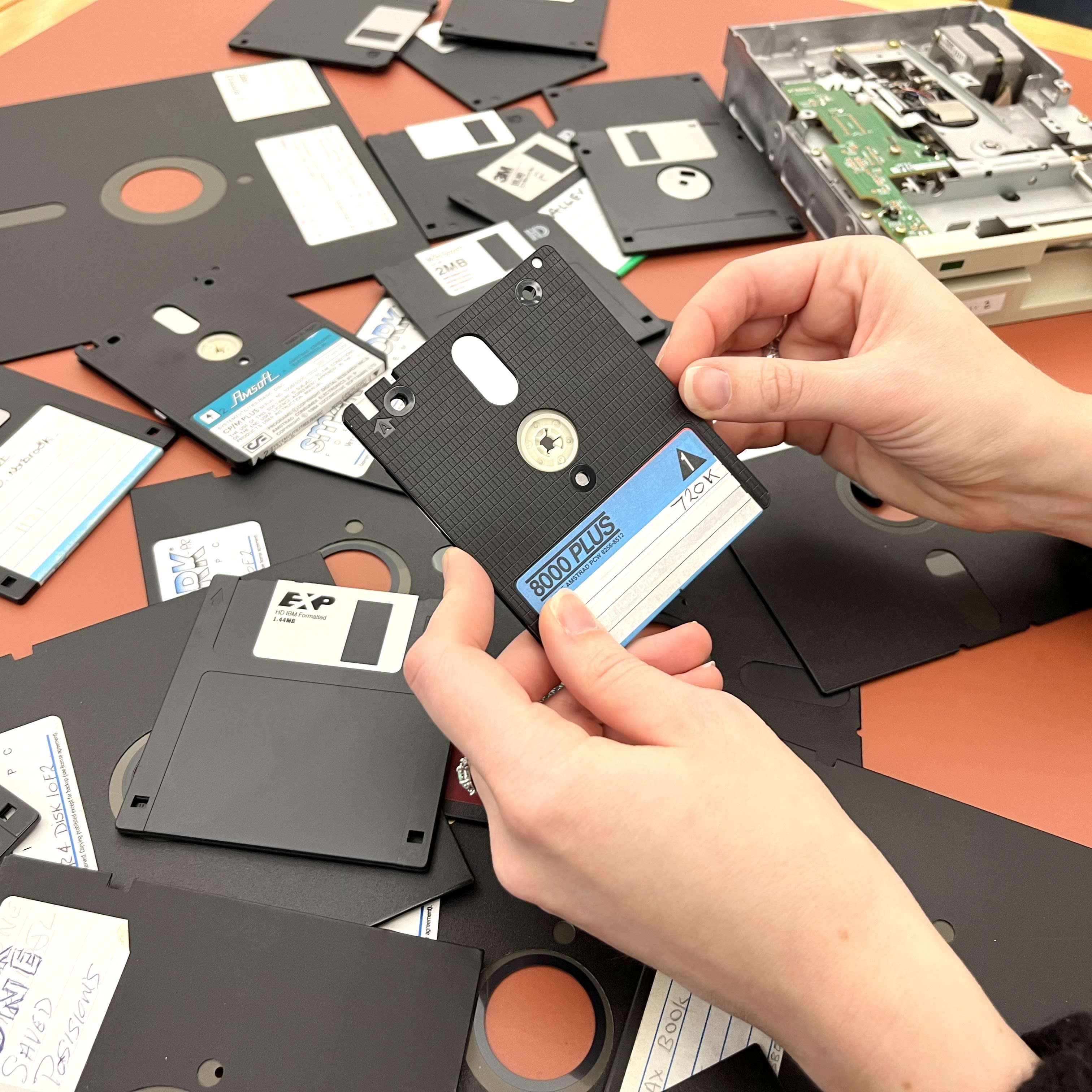
Figure 3: Different floppy disk formats being examined during preservation activities.
Major Causes of Floppy Disk Deterioration:- Magnetic Deterioration: Changes in the magnetic recording properties may weaken stored signals and make information difficult to retrieve accurately.
- Physical Damage: Bending, scratching, wrinkling or deforming a floppy disk may damage its recording surface and prevent proper reading.
- Dust and Contamination: Dust, fingerprints and other contaminants may interfere with the contact between the recording surface and the disk drive's read/write heads.
- Binder Deterioration: Chemical degradation of the material holding magnetic particles to the plastic base may cause deterioration of the recording surface.
- Moisture and Biological Growth: Damp storage conditions may encourage mould growth and adversely affect the recording medium or its protective jacket.
- Magnetic Fields: Strong external magnetic fields may alter recorded magnetic information and cause data loss.
- Technological Obsolescence: Modern computers generally do not include floppy disk drives. Older disk formats may also require particular controllers, operating systems or software that are increasingly difficult to obtain.
7. Preservation Methods for Floppy Disks
Floppy disk preservation involves protecting the physical medium and transferring its digital information to suitable managed storage before deterioration or equipment obsolescence prevents recovery.- Proper Storage: Floppy disks should be kept in suitable protective sleeves or cases, preferably in an upright position, in clean and stable environmental conditions. Excessive heat, humidity and physical pressure should be avoided.
- Protection from Magnetic Fields: Floppy disks should be kept away from strong magnets and equipment capable of producing substantial magnetic fields.
- Careful Handling: The exposed magnetic recording surface should not be touched. Disks should not be bent, folded or subjected to excessive pressure. Protective shutters and jackets should remain in place unless specialist examination is necessary.
- Condition Assessment: Before reading a disk, its physical condition should be examined for contamination, damage or mould. Damaged disks should not be inserted into ordinary drives without appropriate professional assessment.
- Use of Compatible Equipment: Appropriate floppy disk drives, controllers and software are necessary for retrieving stored information. Different disk formats may require specialised reading arrangements.
- Write Protection: Write protection prevents accidental modification of the original disk during access. Where compatible hardware permits, write-protection mechanisms or specialised write-blocking arrangements should be used to reduce the risk of altering source data.
- Disk Imaging: Disk imaging is the process of creating a digital representation of the information stored on a physical disk. Depending on the technology and method, an image may represent the disk's logical sectors or capture lower-level magnetic recording information. A disk image is different from merely copying visible files. It may preserve information about the original disk structure and other data that ordinary file copying would not retain.
- Verification and Documentation: After transferring information, the resulting data should be checked for readability and completeness. Technical details, recovery errors, disk format information and actions performed during transfer should be documented.
- Preservation of Extracted Files: Recovered files should be stored in a managed digital preservation environment. They may require further examination or migration if their original file formats depend on obsolete applications.
The University of Cambridge also operates a digital transfer service for legacy storage media, including floppy disks. Its Future Nostalgia research project investigates appropriate methods for identifying, handling, imaging and preserving historical floppy disks.
These initiatives demonstrate that floppy disk preservation requires both conservation awareness and specialised digital information recovery procedures.
8. Preservation of Optical Discs: CDs, DVDs and Blu-ray Discs
Meaning of Optical Disc: An optical disc is a digital storage medium that uses laser-based technology to read information recorded in microscopic structures or specialised recording layers. Optical discs have been widely used for distributing and storing electronic books, educational materials, software, photographs, audiovisual recordings and other digital information.Major Types of Optical Discs:
- Compact Disc (CD): A widely used optical storage format originally developed for digital audio and subsequently used for computer data. A standard CD-ROM commonly stores approximately 650–700 megabytes of information.
- Digital Versatile Disc (DVD): An optical disc format providing greater storage capacity than a CD. A common single-layer, single-sided DVD stores approximately 4.7 gigabytes of data.
- Blu-ray Disc (BD): A higher-capacity optical disc format that uses a shorter-wavelength laser than conventional CDs and DVDs. A standard single-layer Blu-ray Disc stores approximately 25 gigabytes of information.
- Read-Only Discs: Information is recorded during manufacturing and is not intended to be changed by users. Examples include CD-ROMs, DVD-ROMs and BD-ROMs.
- Recordable Discs: Users can record information onto the disc, but ordinary recording mechanisms do not permit the recorded information to be erased and rewritten. Examples include CD-R, DVD-R and BD-R.
- Rewritable Discs: These allow information to be erased and recorded again through suitable recording technologies. Examples include CD-RW, DVD-RW and BD-RE.
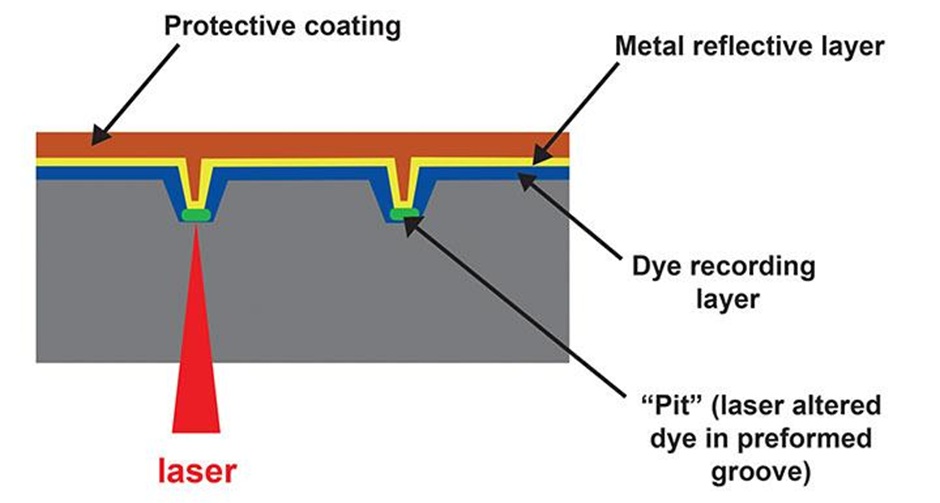
Figure 5: Examples of optical discs with different recording capabilities.
Major Causes of Optical Disc Deterioration:
- Surface Scratches: Scratches and abrasions can interfere with the laser's ability to read recorded information. The consequences depend on the disc format, affected surface and severity of damage.
- Recording Layer Deterioration: Certain recordable discs contain organic dye layers that may deteriorate because of heat, moisture and chemical instability, potentially affecting data readability.
- Corrosion of Reflective Layers: Optical discs contain metallic reflective layers that may deteriorate through chemical reactions, manufacturing defects or exposure to unsuitable environmental conditions.
- Delamination: Separation of the internal layers of an optical disc may result from manufacturing defects, mechanical stress or environmental deterioration.
- Excessive Heat and Humidity: High temperatures may deform the plastic substrate, while unsuitable humidity conditions can contribute to chemical deterioration or structural damage.
- Improper Handling and Labelling: Fingerprints, adhesive labels and unsuitable writing instruments may damage disc surfaces or their protective layers.
- Equipment Obsolescence: Even a well-preserved disc may become inaccessible when compatible optical drives and associated technologies are no longer available.
9. Preservation Methods for Optical Discs
The preservation of optical discs involves protecting their physical structure while ensuring that the recorded data can be transferred and maintained beyond the useful life of the original carrier.- Proper Handling: Optical discs should be handled by their outer edges or centre holes. Direct contact with their recording surfaces should be avoided because fingerprints, oil and dirt may interfere with readability.
- Appropriate Storage Containers: Each disc should be stored individually in a suitable rigid case. Standard jewel cases provide protection against scratches and mechanical damage. Discs should generally be stored vertically in their cases.
- Environmental Control: Optical discs should be stored in cool, relatively dry and stable conditions. Excessive heat, direct sunlight, high humidity and rapid environmental fluctuations should be avoided.
- Avoidance of Adhesive Labels: Adhesive labels should not be attached to optical discs because the adhesive and forces involved in their removal may damage protective or reflective layers. Information should preferably be recorded on the disc's storage case.
- Careful Cleaning: Loose dust may be removed using appropriate cleaning procedures. When cleaning is necessary, the method should be suitable for the particular disc format. Abrasive materials, household cleaning chemicals and unnecessary polishing should be avoided.
- Periodic Readability Testing: Discs should be checked periodically to determine whether their contents can still be accessed. Readability testing may help identify deterioration before complete information loss occurs.
- Data Transfer: Important information should be copied from optical discs to suitable managed storage systems. Data transfer should be completed before the original discs deteriorate or compatible reading equipment becomes unavailable.
- Integrity Verification: Transferred files should be checked to confirm that their information has been copied correctly. Checksums and other verification methods help identify unintended changes in digital files.
- Retention of Important Originals: Original optical discs may need to be retained when their physical form, labels, packaging or historical context has continuing research or evidential value.
A study published by the Council on Library and Information Resources (CLIR) in cooperation with the National Institute of Standards and Technology (NIST), Care and Handling of CDs and DVDs: A Guide for Librarians and Archivists (Byers, 2003), provides authoritative guidance on the physical care, storage and long-term management of optical discs.
10. Preservation of Hard Disks
A Hard Disk Drive (HDD) is a magnetic data storage device that records information on rotating rigid platters. Hard disks may be installed inside computers or used as external storage devices. Unlike floppy disks, hard disk drives contain complex mechanical and electronic components, including rotating platters, read/write heads, motors and controller circuitry.Major Preservation Problems:
- Mechanical Failure: Hard disk drives contain moving components that may deteriorate or fail over time. Damage to read/write heads or motors may prevent access to stored information.
- Physical Shock and Vibration: Strong impacts or excessive vibration may damage internal components or recording surfaces.
- Environmental Conditions: Excessive heat and unsuitable humidity may affect electronic components, mechanical reliability and overall drive performance.
- Electronic Failure: Damage to controllers, circuit boards or power-related components may prevent the drive from functioning.
- Data Corruption: Digital information may become inaccessible because of recording errors, file-system damage or other technical failures.
- Technological Obsolescence: Older drives may use interfaces or technologies that are no longer supported by commonly available computing equipment.
- Controlled Storage: Hard disk drives should be stored in clean, stable environments and protected from excessive heat, moisture and dust.
- Careful Handling: Drives should not be dropped, subjected to strong vibration or unnecessarily opened.
- Appropriate Power and Equipment: Reliable electrical connections and compatible computer interfaces should be used to reduce the risk of operational damage.
- Regular Condition Monitoring: Drive health and accessibility should be assessed using appropriate diagnostic and monitoring tools.
- Maintenance of Multiple Copies: Important information should be maintained in more than one storage location to reduce dependence on a single device.
- Integrity Verification: Stored files should be checked periodically to identify unintended changes or corruption.
- Timely Data Migration: Information should be transferred to newer storage systems before ageing hardware or unsupported interfaces make recovery difficult.
11. General Preservation Process for Films, Floppies and Disks
A systematic preservation programme should follow a logical sequence from material identification to continuing access and monitoring.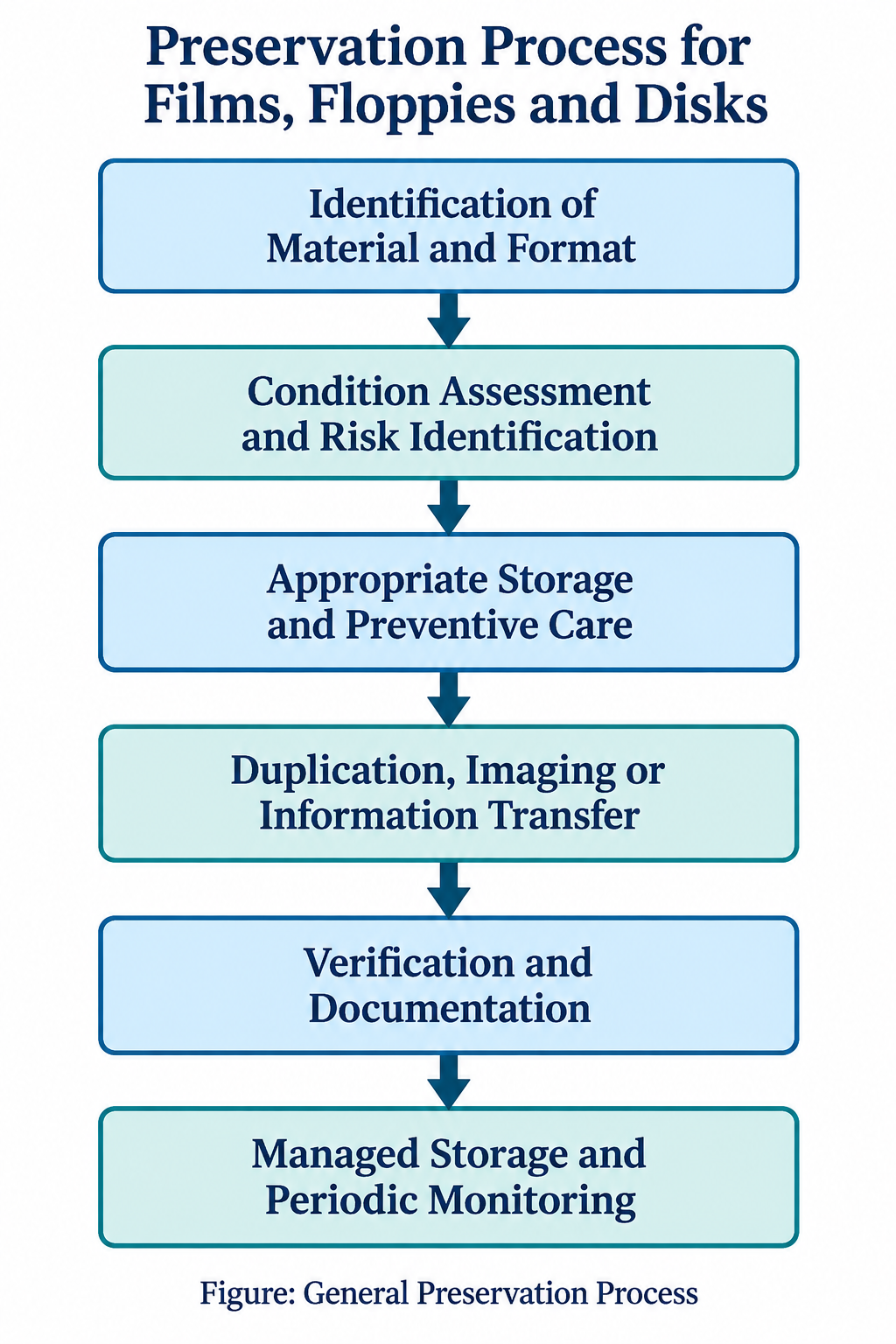
Figure 6: General preservation process for films, floppies and disks. Original conceptual flowchart based on institutional preservation guidance.
- Identification: The medium, recording format, physical characteristics and necessary playback or reading equipment are identified.
- Condition Assessment: Materials are examined for physical deterioration, environmental damage, recording errors and technological risks.
- Preventive Care: Appropriate storage, handling, environmental monitoring and protective enclosures are provided according to the medium.
- Information Transfer: Vulnerable or obsolete carriers are reproduced, digitised or imaged using suitable methods and equipment.
- Verification: Transferred information is checked for completeness, readability and integrity. Relevant technical and preservation information is documented.
- Continuing Management: Preserved information is maintained in reliable storage, with appropriate monitoring and further transfer when technological changes require it.
- Institutional Responsibilities: Libraries, archives and information centres should maintain inventories of their holdings, identify vulnerable materials, establish preservation priorities, provide suitable storage facilities and maintain access to necessary technical expertise. Preservation decisions should consider both the informational value of the content and the physical or historical significance of its original carrier.